
A Route that Looks Back
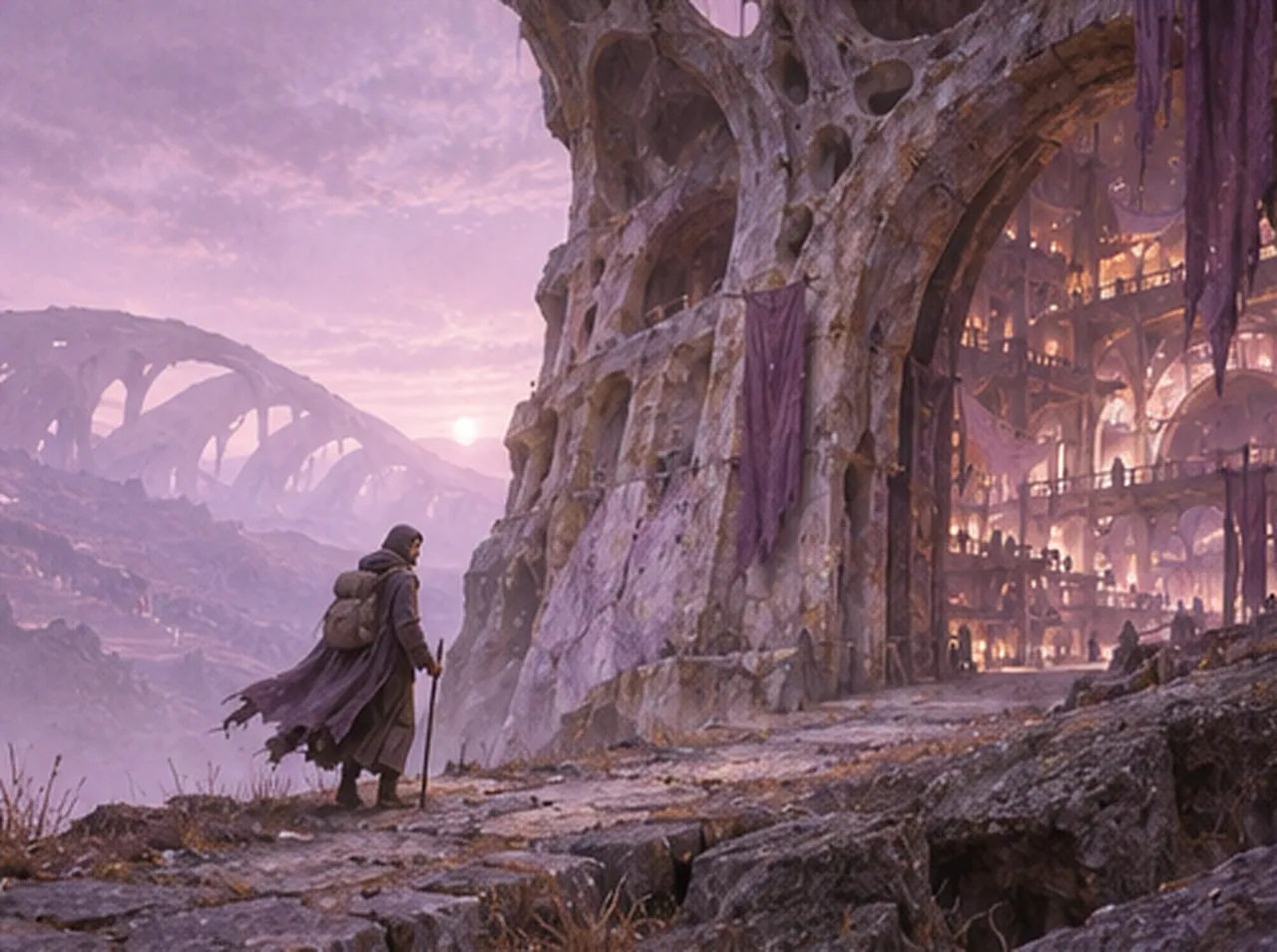
A first exit from the heart city pointed the traveler into a narrow passage beside a cistern. It reached an open slope without showing what part of the city had come before. The view felt like a sudden new setting, and the previous route stopped being an object the player could think about. We tried turning the exit so the traveler could briefly see a familiar ledge beyond one of the windows. The ascent already had several resting points that could appear in the return. One of them needed enough shape to do so from below and behind.
Find what the entrance once revealed
A shallow ledge near the start is visible through two tilted fossil arches. Its end has a repaired notch where somebody extended a place to stand. Looking out of the city as the player leaves, part of that extension should still be recognizable. The rest of the platform may be hidden under the rib. We kept its angular lower edge in sight rather than matching the whole wall. City Behind the Rib uses the high shoulder for the first extended view of the roofs. Bringing its edge into the exit puts it in a useful relationship to the streets the traveler just crossed.
Let the player look from a place with support
There is a turning point before the open slope, a place to stop briefly and let a low wall settle under the camera. The traveler can face the city without fighting a narrow movement input. A small level plane in the fossil gives their stance an anchor. From there the repaired edge of the old ledge is visible just above one row of lights. If they go another step forward, the ledge is covered and the long curve of the inner street appears. A graceful return requires the player to have some control over when either view is available.
Use light at two sizes across the view
The chamber has close lanterns with large pools of yellow. The distant roofs glow as smaller dots beneath the reach of the bridge. The older ledge is the broad dim shelf above them. Showing it across two sizes of human light helps a traveler decide whether they are looking at a familiar ridge or the roof of a building. Steps of the Hollow Giant puts a similar visual link around the quiet bridge so someone leaving the center can retrieve a memory from their approach. The late view can preserve one old direction while showing a nearer doorway that explains it better.
Keep a return short enough to try
Follow the slope out and leave enough space at its base to see where the return will begin. The route back takes a lower threshold with a shorter climb toward the rest. Making a loop through familiar stone can give somebody another chance to identify the first approach. A path back that takes too long encourages players to press straight ahead and leave the earlier view unchecked. A small cold light at the base of the slope brings the returned walker to the same sill without putting a marker over the whole vista.
Learn from what someone mentions on leaving
At the end of a trial ask which direction they would point to show where they first stood in the city. They may remember a lantern or the side of a raised street. Let them make that choice from the visible context and then step back to see how it relates to the repaired ledge. A successful exit can give a player an extra piece of place after they have already stopped needing it for movement. The remembered rest remains useful across the size of the giant because the route gives it a second role in the view.