
Steps of the Hollow Giant
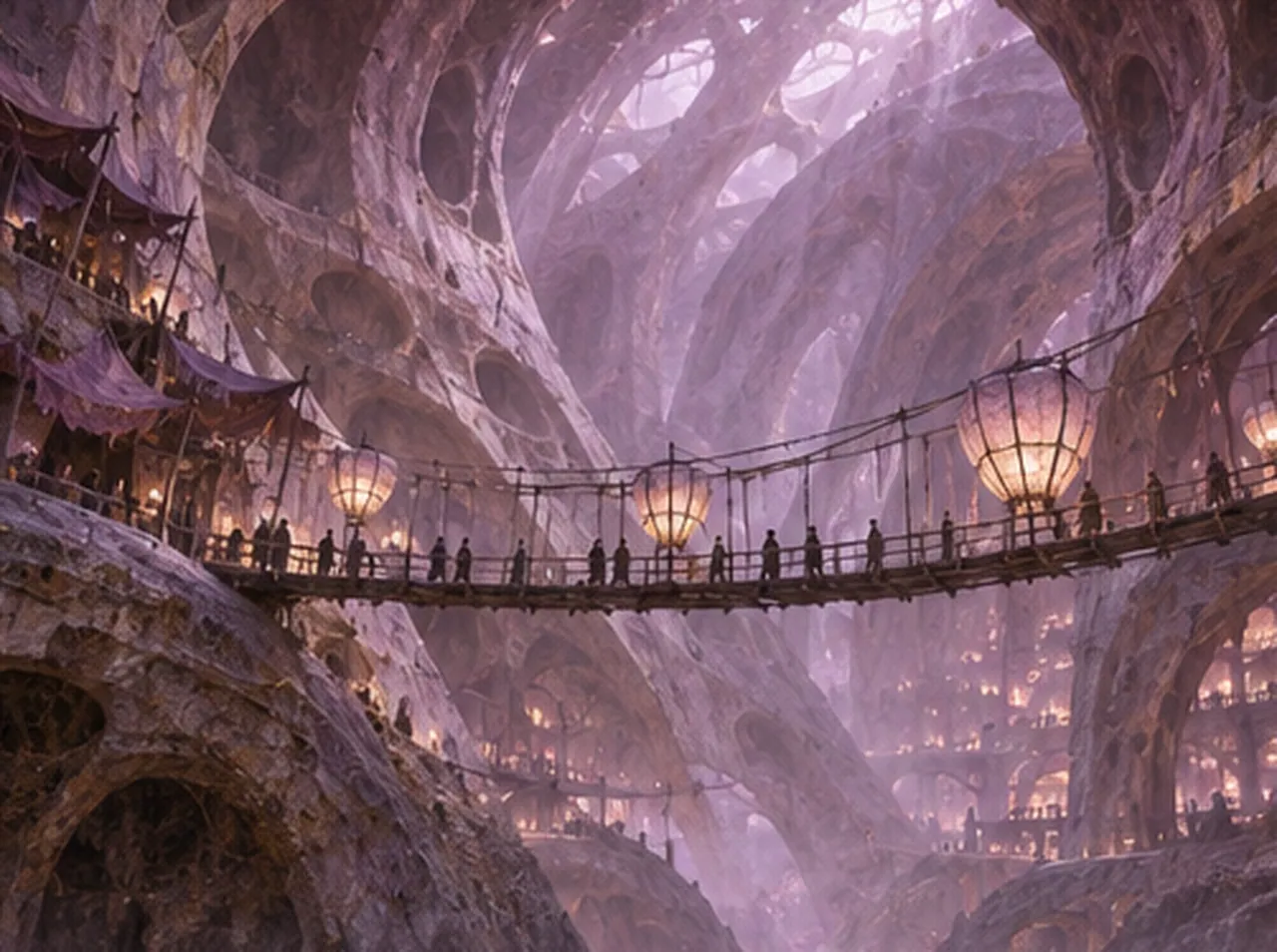
Long before the traveler arrives, passages have grown into an inhabited heart chamber. Some houses share a long suspension bridge. Others sit behind an old membrane of pale stone that leaves a low hole the size of a door. Steps of the Hollow Giant is a navigation concept set in that enclosed city. The player is large when measured against an individual threshold and tiny when measured against a rib running overhead. A sequence of footpaths lets the two proportions meet in ordinary movements.
Stop where the first sound can change direction
A nearby platform rings once when crossed quickly. At its far edge the ring seems to come from behind a broad wall. A player can inspect how the floor opens beneath the platform and find a passage below the wall. This supplies a guess about which side of the bridge faces the next district. Hearing through the Quiet Bridge shows how a second listening spot makes that first guess testable. A marker beside the platform also suggests which way to travel if the sound is too faint or the player is using captions. The architecture offers another route to the same useful distinction.
Bring an indoor curve into the wider chamber
The next loop follows the mineral wall into a room that is gradually lit by fabric lanterns. A curtain baffle changes the shorter echoes before the player reaches the bridge. Their route climbs a shallow slope with an opening they can look into without leaving the railing. Through it they can see the back edge of a stretch of steps. Take a few paces and the steps look steep from the chamber side despite feeling gentle while approaching. The player can pause and redirect at a place where the two views share a flat ledge. The remembered curve is what makes this a usable choice.
Use an inhabited path to reach an older drawing
There is a still point near the bridge where cloth and light settle into a clear outline. The traveler can align that outline with an older drawing of the heart and identify a shorter trip back toward the entrance. The path is useful even if they wish to remain in the center of the city. It makes some sense of the doorways they passed before entering. A Route that Looks Back connects a place of departure to a glimpse available on the initial ascent. The exit does part of the work of an arrival. It can help the player understand a section of the city that was difficult to place while rushing toward the sound of a market.
Work with fabric, mineral and quiet light
There is violet shade at the edge of tall openings. Lower ceilings catch reflections in a dusty surface. Pale fabric can make a passage visibly narrower while your view of a stone wall is interrupted. A muted light in the larger heart room carries a clear direction without illuminating all of its floor. Small steps receive one edge of that light so they are readable in a text description, a still frame, or a playable camera view.
Verify the next place to rest
The early prototype contains a landing, a quiet bridge and two short routes through the hollow. The immediate aim is to see whether looking toward a doorway and listening for a return both point to feasible choices. A player should gain some idea of the next place they might sit or turn before they have learned the whole shape of the city.