
Distance between Two Hooks
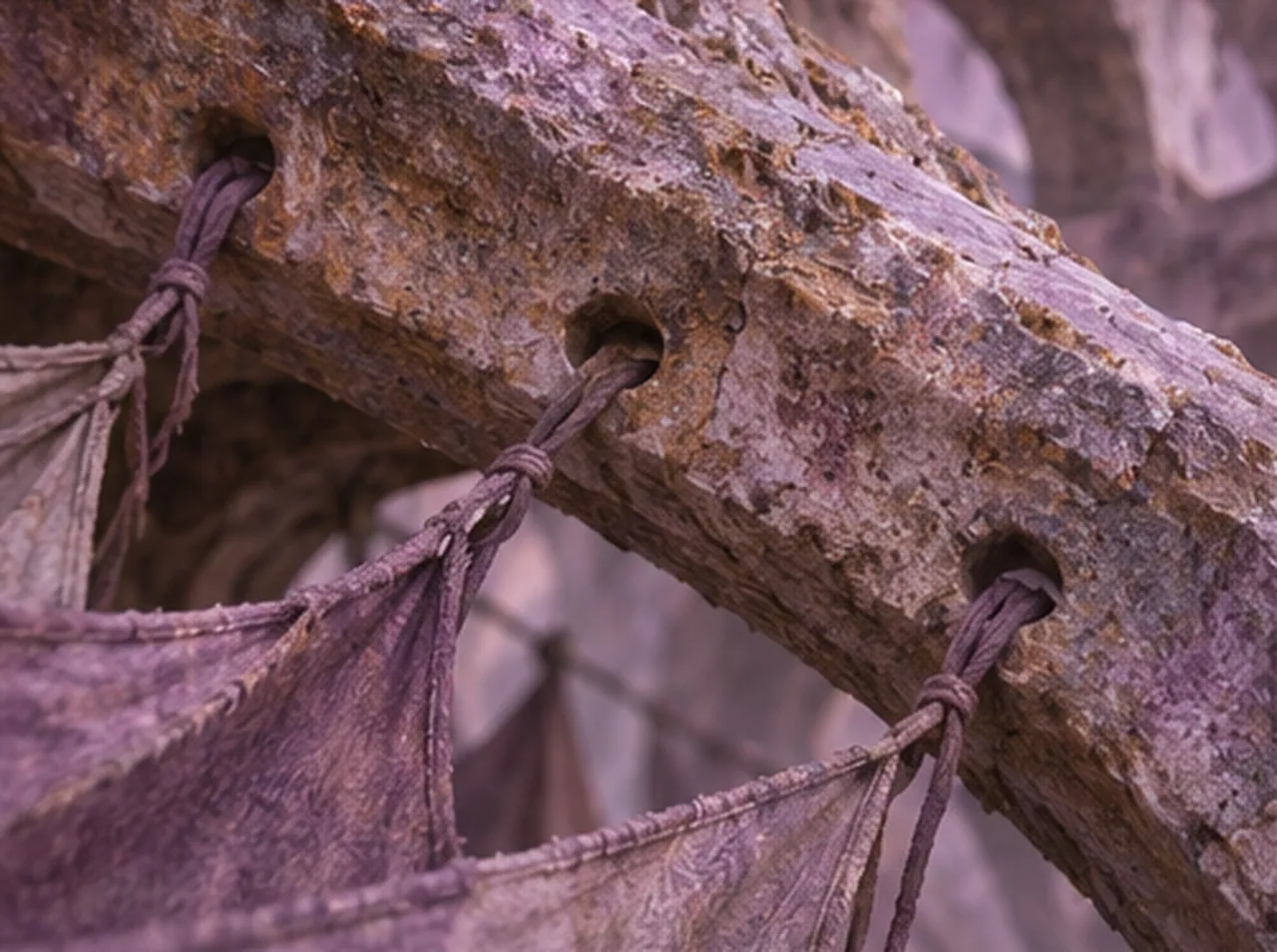
Two fittings placed within arm’s reach can make the next five meters of a giant’s rib feel navigable. The first model of the outer ascent put all of the hooks at the far end of long gaps. They were clear in the drawing, but the traveler had no everyday distance to use when judging the wall. This study starts with one hook near a turn in the ramp. We gave a second hook a small step of approach to make it possible to think about length in the first sequence of movements.
Read the feet of the hooks from the ground
Both hooks leave enough metal in the stone for the eye to see where they begin. Lift the camera a little and the slant of the rib brings the bases into alignment. The near one holds a darker thread on the underside. The far one looks lower until you make a sideways movement. These details let the traveler keep track of the two positions as the geometry changes. Try to get to the near fitting before measuring the far one. The ground under it slopes gently enough to make the first grip possible without an elaborate jump.
Let the same distance appear farther away
The next short stretch has a pair of handprints an arm’s length apart. Their distance repeats something the player felt at the first hook. After reaching a low shoulder, look down at a stretch of bridge across the side of the rib. Its blocks are smaller in the image than the handprints were. Instead of reading the width of a short painted edge as a ready-made sign, the traveler has an ordinary width to use as a reference. City Behind the Rib uses its first rest to offer two choices after that width has been experienced near and far.
Give the approach a readable check
We put the second hook where a repair changes its color around the edge. A shallow shadow beneath it describes how much space a hand could get. The important edge still needs grounding near the foot of the rib, where the view can show what lies beneath. Strong reflected light at the top can make the far hook easy to spot and hard to interpret. The little thread near the first one catches a local light, so the player can check when the rib is turning and decide how to adjust the route. The visual plan for Where the Long Shadow Ends uses a related difference on a much larger surface.
Keep reaching distinct from looking
The first control needs time for a player to look where they intend to go. The reach waits until their body has a place to take support. They can follow a far landmark with their view while keeping one hand near the first visible grip. This makes the two hooks decision points in a route instead of targets that must be grabbed whenever they fall into frame. A small model can let a player turn and find the floor below without completing a jump. The ability to reverse also makes it possible to see what position the distance came from.
Check the distance after the traveler climbs
At the upper rest, ask how far apart the two starting points seemed and where a person would stand to move from one to the other. A route can work even when the player’s numerical estimate is rough. If they recognize the shoulder they just reached and can locate the next reachable edge using a known width, the scene gives them a useful comparison. The first hooks can now remain small within the view. A player remembers them through the movement they needed, and that is the right scale for the next open stretch of wall.