
Where the Long Shadow Ends
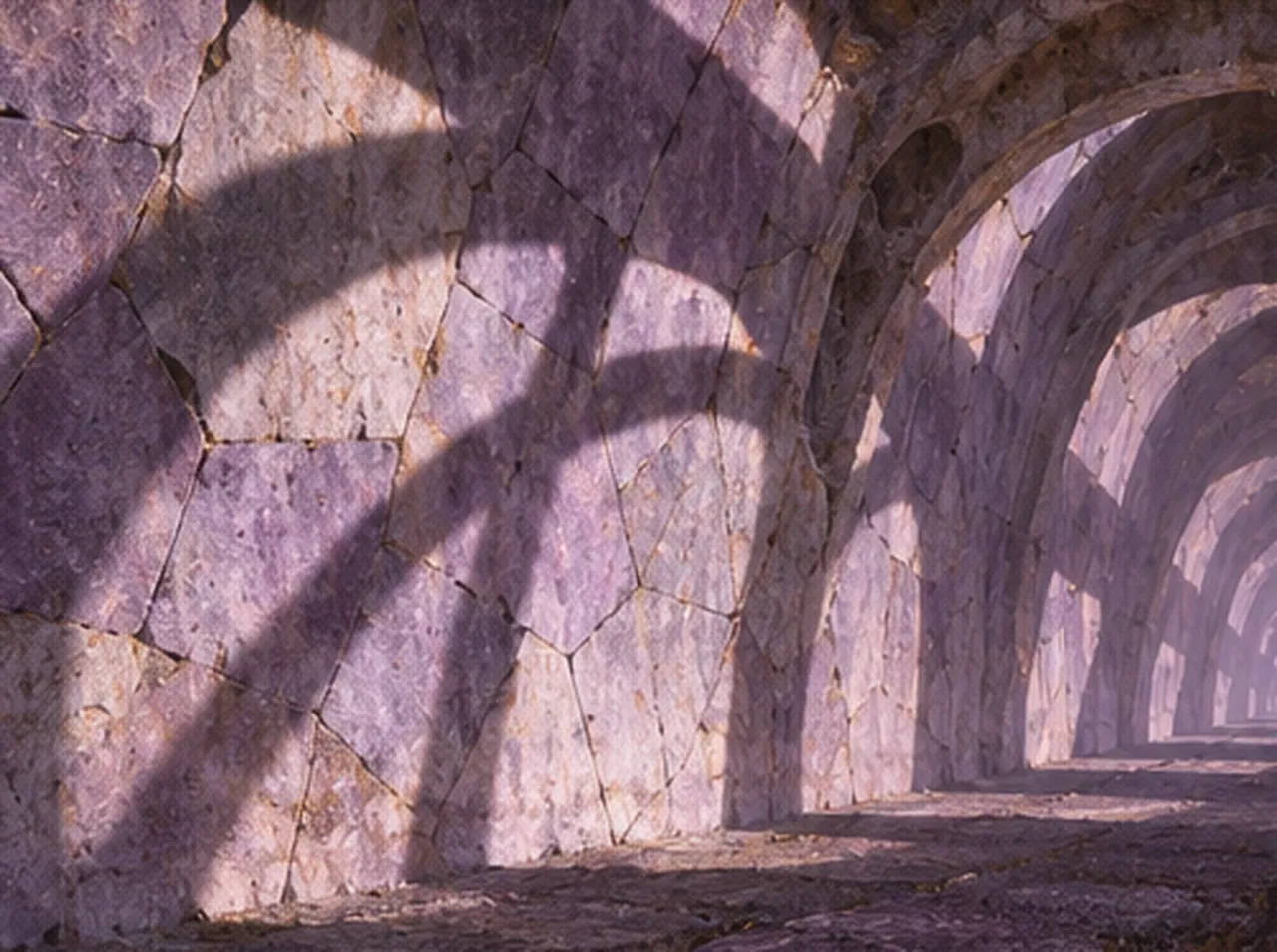
The shadow in this trial reaches from the face of a projecting rib into a wall made from many pale stone tiles. Seen from a high platform, it points almost exactly to a small door. Seen while walking toward the door, its longest edge is hidden against a rough bit of floor. We wanted a scene where a traveler can use the boundary as an observation from the first view and refine it when that view disappears. We started by drawing one useful corner of the wall in two full views.
Separate the tiled face from the rough layer
The end of the shadow becomes easier to locate where it crosses horizontal rows of tiles. The floor beneath is old uncut mineral, with an irregular ridge that blocks the lower edge. We made the pale rows broad enough for the player to track them without zooming. A slightly rougher joint beside the doorway forms a distinct break in each row. If the camera leaves the high platform, the light changes shape while the rough joint remains the same. It can stay in a player’s line of sight along the lower route and keep the important point near the door.
Walk a route that checkpoints the edge
City Behind the Rib uses a high rest before a longer turn toward the inhabited heart. From that rest the sharp end of the rib shadow sits near the lower right edge of the scene. The player can follow the tiled wall until an outcrop limits the view from the platform. When the path slopes back toward the shadow, give it one small stop with room to look at the previously visible joint. The turn can become a decision. The player can either continue toward the taller door or descend slightly to see the point where the shadow and joint meet again.
Keep the shadow readable without making it a sign
A solid area of purple made all nearby texture hard to see. Drawing a wide line around the end gave the shadow the look of an artificial arrow. A lifted natural dark tone preserves the few tiles it crosscuts. An unseen room opening throws weaker light into the shadow so it still has depth. The player can stand against the wall and describe where the darkest boundary belongs without inventing a separate color rule. In Distance between Two Hooks a familiar width did the work of making the next seen distance comprehensible. Here rows of tiles make a wider boundary possible to compare.
Let the door face a different direction
Moving a small door farther around the corner stopped the shadow from pointing at its exact center. The corner now makes better sense as a thing the traveler can inspect before turning. A doorway farther inward is open to a shaft that leaks a slice of dusty light onto the tiles. It can draw attention after a player has crossed the shadow and located the rough joint. The distinction between the shadow and the glow creates the next question. One boundary supplies a place to look from. The next opening supplies a reason to go farther into the chamber.
Test what remains after the view is gone
Ask a player to draw where they were when the shadow seemed to point toward a door. Follow their mark from the first rest and stop where their old view disappears. If they can locate the rough joint or estimate how many rows preceded it, the room gives them a usable link between high and low views. We can adjust the corner and leave the distance in the rest of the climb unchanged. A long shadow on a giant rib should keep its sense of natural scale while offering a small edge a traveler can actually return to.