
Hearing through the Quiet Bridge
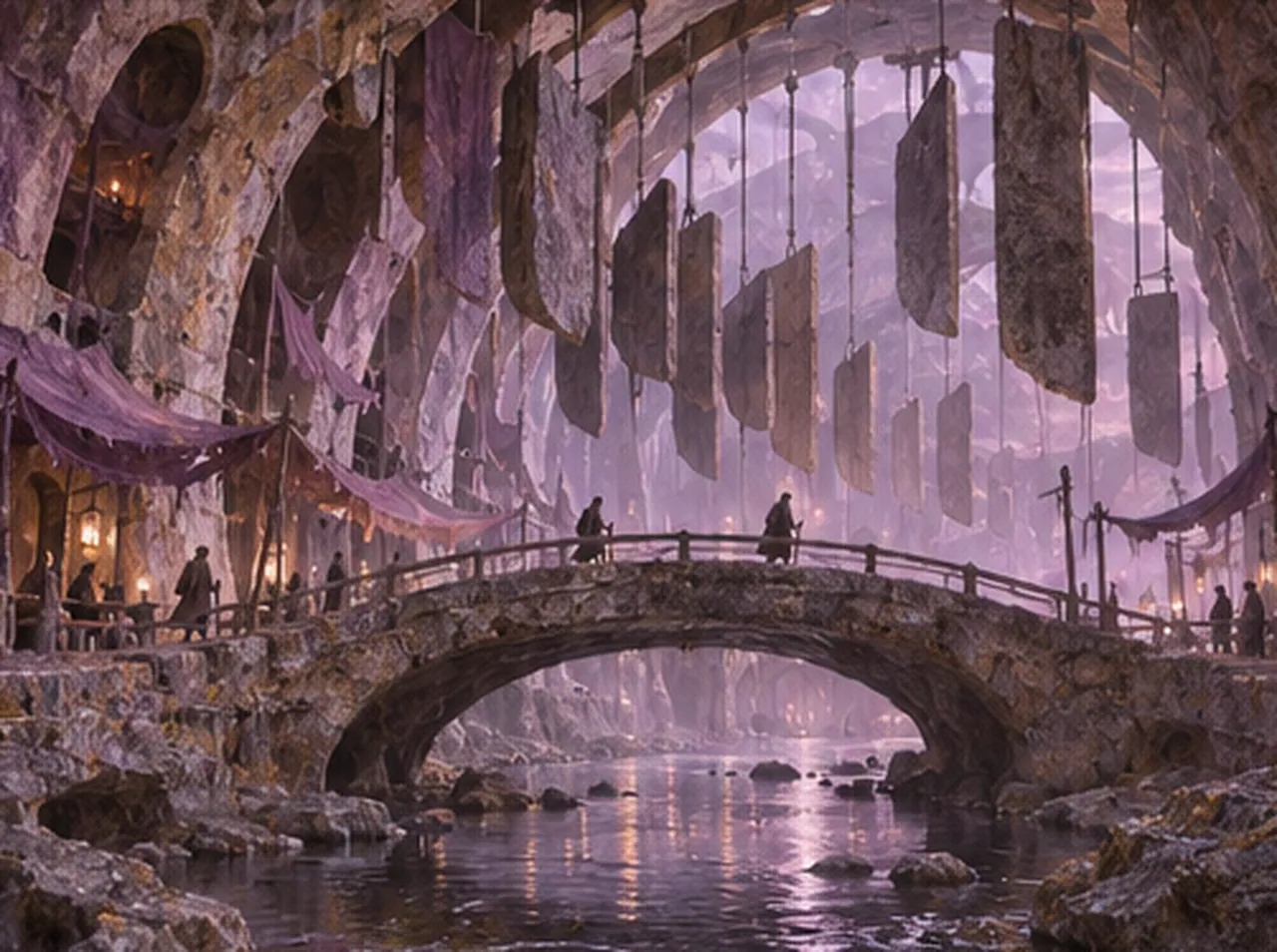
A narrow bridge in the heart chamber runs under a shelf of old mineral. On the first pass it sounds as though the whole district is behind the inner wall. A fabric baffle and two slits turn a returning echo into something a traveler can place. This study gives the player two reasons to pause before choosing an exit. One stop is close to the railing, where the left edge of the bridge is open below. The other is nearer the baffles and well inside the enclosed part of the crossing.
Take a first listening position where the ground has shape
The first place to stop is marked by a shallow step whose edge remains visible. The hanging cloth beyond it hardly moves. Pressing a heel down by the step produces its close wooden tap and a soft return from the lower part of the chamber. The return lasts long enough to hear where it came from even if the tap was brief. An equivalent directional caption can point to the opening below the railing. Steps of the Hollow Giant leaves room to check the low opening visually before asking anyone to use the echo as a clue.
Move beneath the first baffle
The second position is nearer the wall. A baffle breaks the direct path above the bridge, and the near wall should make a shorter return apparent after the player moves. The low opening still has space to guide the longer sound around the end of the crossing, though the direction changes a little. We can now ask whether a shuffling noise came from the walk ahead or whether the material nearby returned it from another direction. The challenge is to make the difference clear enough for someone hearing either pitch or timing to follow the route.
Keep a visible bridge between the two observations
A plate made from an old dark mineral runs below both listening spots. Someone following the plate in the illustration can tell when they are near the cloth and when they are again by the open left edge. This lets us keep the physical source of the sound in view after it has become hard to hear. If a player mistakes the cloth for the source of an echo, a further look down the side of the bridge reveals how the longer return reached the baffle. The clue gets a place in the chamber instead of a second sound floating somewhere above it.
Let the sound carry a possibility into another room
The next turn in Steps of the Hollow Giant points toward a chamber partly enclosed by a thin wall. Just before the turn, the player can hear a movement with the timing they practiced at the first railing. Let them take a few steps into the quiet and look backward as the shorter return changes again. A Route that Looks Back uses the same idea of keeping an old place recognizable from a new position. The bridge can take on that job even if the traveler first found the way by looking at the cloth and the opening.
Leave enough time for silence
A loud mark on every step would make the chamber feel constantly busy. The trial works better when the player has control over the short sound and can wait for it to fade. Following an opening should not require missing the last lines of a previous conversation. A prototype review can ask where the player thinks the two different returns came from, and where they would stop to make the next comparison. If they can identify both places from a wall, a pause, or an edge on the deck, the sound has helped build a usable part of the city.